
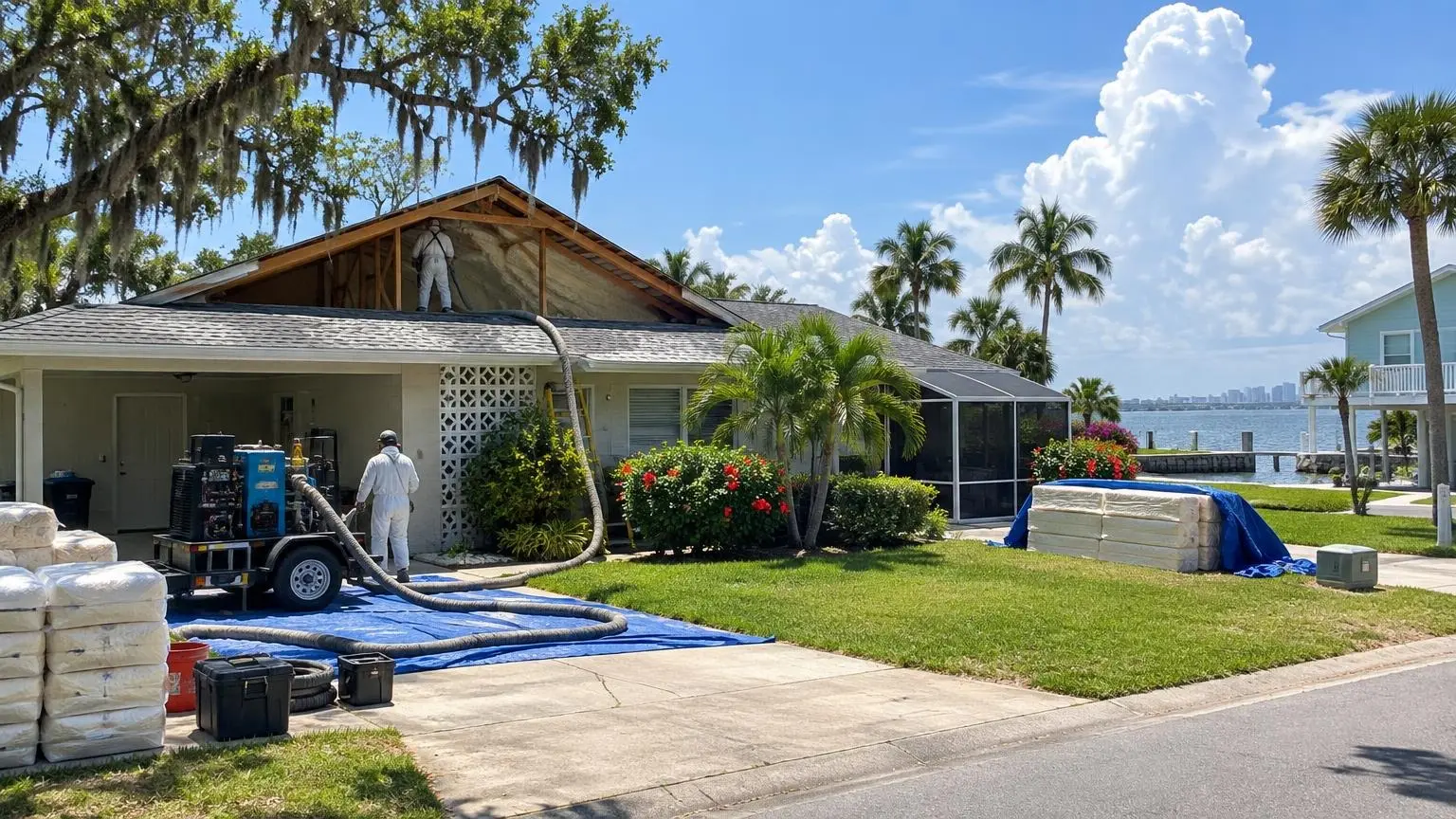
Concrete block and wood frame
Wall Insulation in Clearwater, FL
Insulate exterior walls while they are open, or fill frame walls from the outside without tearing out drywall.
- Free on-site estimates
- Written quote naming foam type, thickness and R-value for each area
- Attic, ducts and roof leaks checked before anything is covered
Walls Built of Block, Walls Built of Wood
Wall insulation in the Clearwater area starts with one question: what are your walls made of? Many Pinellas houses have exterior walls of concrete block with a thin layer of furring and drywall inside. Others, especially additions, second stories and newer homes, are wood frame. The two need different approaches, and the right time to insulate either is usually during a remodel, an addition or after storm damage, when the walls are open anyway.
Block walls
Concrete block holds heat and releases it slowly, so a sun-baked west wall can keep radiating into a room into the evening. The 2023 Florida Building Code, Energy Conservation treats these as mass walls; for climate zone 2 its prescriptive table lists R-6 when the insulation is on the interior side, or R-4 continuous. In older block homes the inside face often has little more than furring strips and foil-faced board. When the drywall is off, closed-cell foam sprayed against the block, or foam board with the seams sealed, can bring the wall up to that target and seal air leaks around windows and outlets at the same time.
Wood frame walls
The same code table lists R-13 for wood-frame walls in zone 2. In open stud bays during a remodel or addition, open-cell foam fills a 2x4 cavity and seals around wiring and boxes; closed-cell gives more R-value per inch where the cavity is shallow or the wall is exposed to moisture. For a closed frame wall with little or no insulation, dense-pack cellulose or fiberglass can be blown in through small holes, usually from the outside behind removed siding or from the inside through patched holes.
Why walls come after the attic
In most Clearwater houses, the attic is a bigger source of summer heat than the walls, and it is easier to reach. We usually recommend dealing with the ceiling first. Walls move up the list when they are already open, when an addition is being built, when one wall faces the afternoon sun and makes a room uncomfortable, or when wet insulation has to come out after water got into the house.
Moisture and termites
Walls in a humid climate need to dry. We do not trap water inside a wall: if we find wet framing, stained block or active leaks around windows, those get fixed first. Florida's residential code also has termite rules that affect foam near the ground. Section R318.8 restricts foam plastic insulation on the exterior face of, or under, foundation walls and below-grade slabs in very heavy termite areas, and requires at least 6 inches between above-grade foam and exposed earth. We keep foam to the inside of the wall and clear of the soil.
After a storm
When water gets into a house, wet insulation in the lower walls has to come out so the framing and block can dry. After drywall is cut and things are dry, re-insulating the open walls is a good moment to upgrade. We can work alongside your restoration contractor or drywall crew on the timing.
What it costs
HomeGuide lists $4,000 to $10,000 to spray foam all the exterior walls of a house, and Fixr lists $3.15 to $7.50 per square foot for existing walls and $2.75 to $6.50 for new construction. Blown-in for existing walls runs $1.10 to $3.70 per square foot in HomeGuide's guide. Your walls, access and finish work decide where your job lands, and we put that on a written quote.
Get a free estimate or call (727) 286-3704 if your walls are open or about to be.
Wall Insulation Options
The methods we use depending on the wall and how open it is.
Closed-cell foam on block
Sprayed on the interior face of concrete block walls during a remodel to insulate and seal in one layer.
Open-cell foam in stud bays
Fills 2x4 and 2x6 cavities in open frame walls and seals around wiring and boxes.
Dense-pack cellulose or fiberglass
Blown into closed frame walls through small holes, then patched.
Additions and second stories
New frame walls insulated to the zone 2 target before drywall.
Post-storm re-insulation
New insulation in walls opened up after water damage, once the framing has dried.
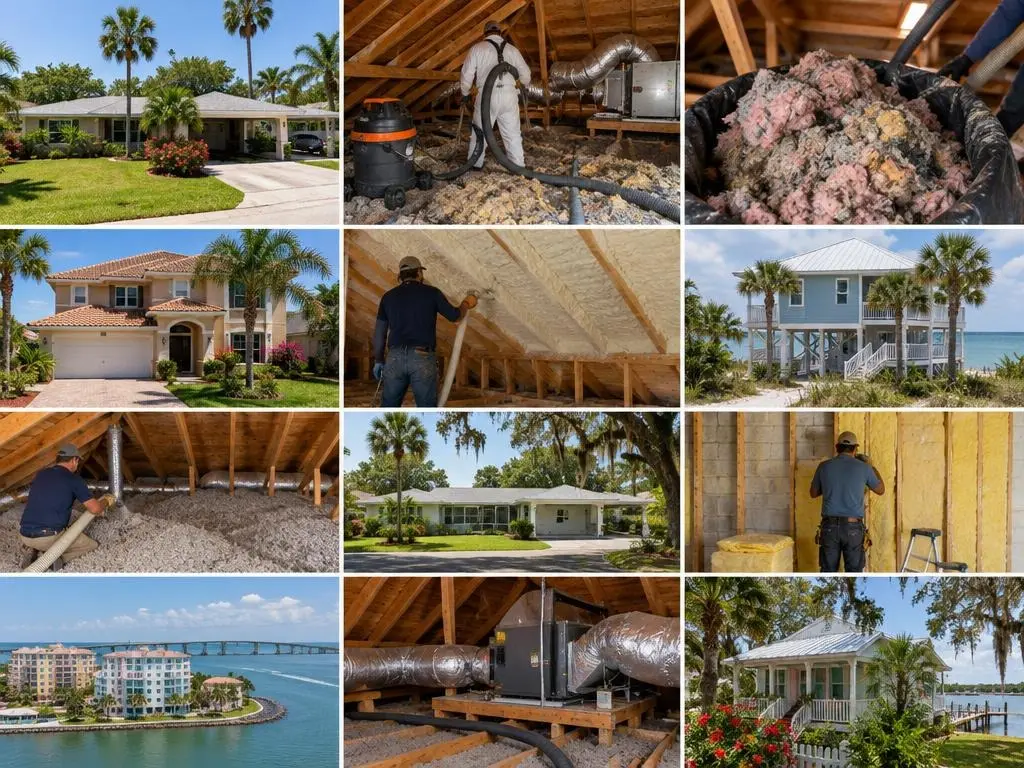
Wall Insulation Cost Ranges
| Job | Range and source |
|---|---|
| Spray foam, all exterior walls | $4,000 to $10,000 (HomeGuide) |
| Spray foam, existing / new walls | $3.15 to $7.50 / $2.75 to $6.50 per sq ft (Fixr) |
| Blown-in, exterior walls | $1,900 to $7,800, or $1.10 to $3.70 per sq ft (HomeGuide) |
| Blown-in walls (Fixr) | $2,000 to $4,000 (Fixr) |
| Dense-pack cellulose | $1.60 to $4.20 per sq ft (HomeGuide) |
| Closed-cell foam, installed | $3.00 to $5.00 per sq ft (HomeGuide) |
These are national ranges from HomeGuide (2025-2026 guides) and Fixr (2025). Wall type, height, how open the wall is and patching or finish work change the cost. We price your walls on a written estimate, and that estimate is the price.
How a Wall Job Runs
1. Look at the walls
We check whether they are block or frame, open or closed, dry or damp.
2. Pick the method
Foam, board or dense-pack, chosen for the wall and written on the quote with the R-value.
3. Install
Open walls are sprayed or filled; closed walls are drilled, filled and plugged.
4. Ready for drywall
Foam is trimmed flush so your drywall crew can follow.
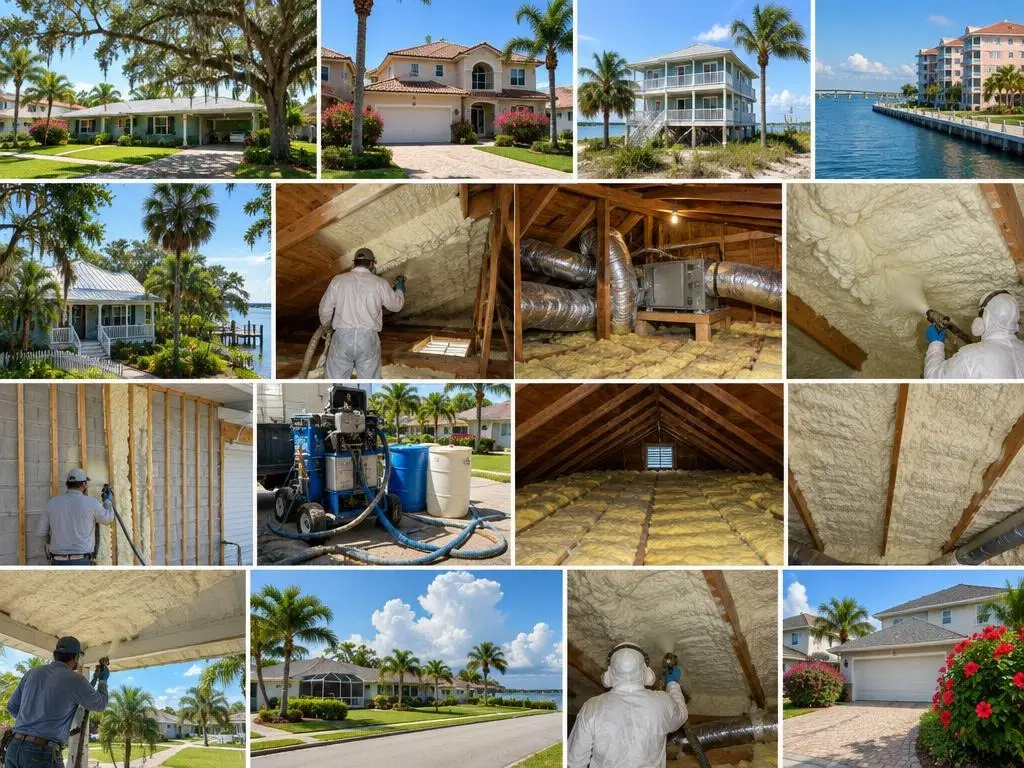
Why Choose Us for Wall Insulation
We work around your remodel
We schedule between demolition and drywall so the walls are not open longer than needed.
Dry before we cover
Damp block or framing is flagged, and we wait until it is dry.
Wall Insulation Questions
Can you insulate concrete block walls without removing drywall?
Not well. The cores of an existing block wall can sometimes be filled, but the usual approach is to insulate the inside face when the drywall is off during a remodel or after water damage.
What R-value do Florida walls need?
The 2023 Florida Building Code, Energy Conservation lists R-13 for wood-frame walls and R-6 interior (or R-4 continuous) for mass walls in climate zone 2. Those apply to new and permitted work.
Is wall insulation worth it if my attic is already done?
It can be, especially for rooms with a west- or south-facing wall in the afternoon sun or when walls are already open. If the attic still needs work, we usually suggest doing that first.
Will foam in my walls attract termites?
Foam does not feed termites, but it can hide their tunnels. Florida code limits foam near the soil for that reason, so we keep it on the inside of the wall and at least 6 inches above exposed earth.
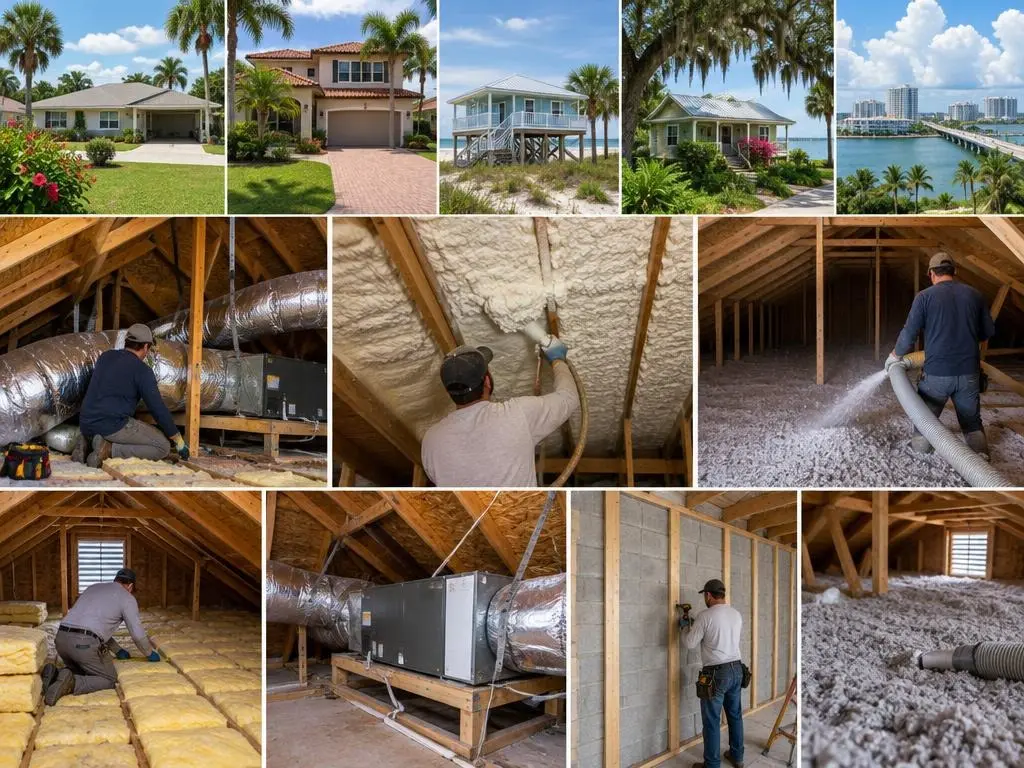
Wall Insulation Service Areas
- Spray Foam Insulation in Clearwater, FL
- Spray Foam Insulation in Largo, FL
- Spray Foam Insulation in Dunedin, FL
- Spray Foam Insulation in Palm Harbor, FL
- Spray Foam Insulation in Safety Harbor, FL
- Spray Foam Insulation in Oldsmar, FL
- Spray Foam Insulation in Tarpon Springs, FL
- Spray Foam Insulation in Seminole, FL
- Spray Foam Insulation in Pinellas Park, FL
- Spray Foam Insulation in East Lake, FL
- Spray Foam Insulation in Belleair, FL
- Spray Foam Insulation in Belleair Bluffs, FL
- Spray Foam Insulation in Indian Rocks Beach, FL
- Spray Foam Insulation in Holiday, FL
- Spray Foam Insulation in New Port Richey, FL
- Spray Foam Insulation in Trinity, FL
- Spray Foam Insulation in Westchase, FL
- Spray Foam Insulation in Town 'n' Country, FL
- Spray Foam Insulation in Kenneth City, FL
- Spray Foam Insulation in Madeira Beach, FL
Get a Wall Insulation Estimate
Tell us what kind of walls you have and whether they are open; we will price the right method.