
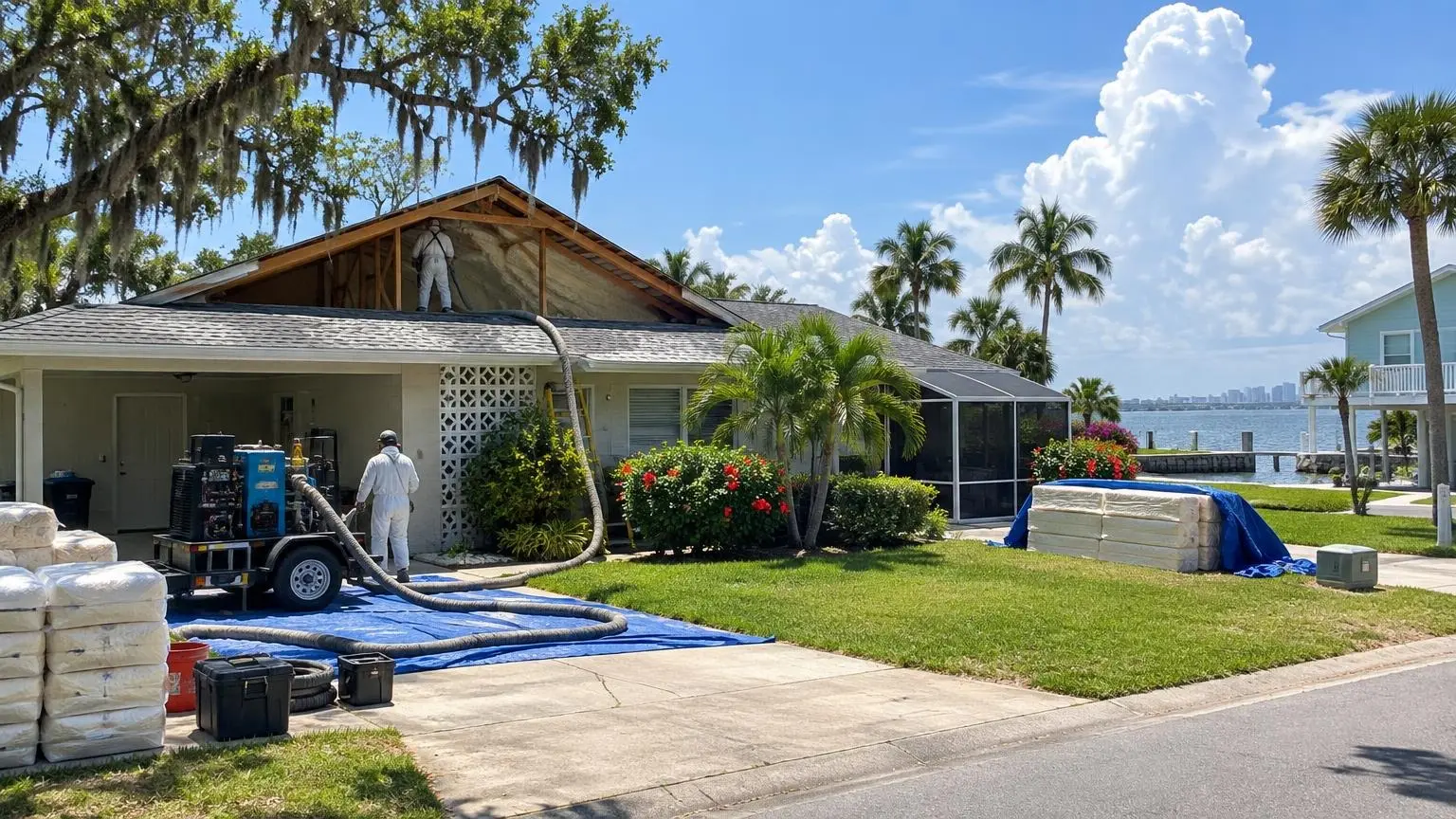
Attic floors and ceiling leaks
Attic Insulation & Air Sealing in Clearwater, FL
Close the leaks in the ceiling, then add depth on the attic floor so the afternoon heat stays overhead.
- Free on-site estimates
- Written quote naming foam type, thickness and R-value for each area
- Attic, ducts and roof leaks checked before anything is covered
The Ceiling Is Where Summer Gets In
Attic insulation and air sealing is usually the first job we suggest in a Clearwater home, because the attic is where most of the summer heat comes from. A shingle roof in full sun turns the attic into a hot box, and the ceiling below it is the only thing between that space and your living room. Air sealing closes the holes in that ceiling; attic insulation slows the heat that comes through what is left. Done together, they are often the most cost-effective comfort upgrade in a Pinellas house.
Why seal before adding insulation
Loose insulation slows heat but lets air pass right through. If warm, damp attic air can move down through a can light or along a wall top plate into the house, piling more fiberglass on top only partly helps. So we seal first. The common leaks are recessed lights, bath and kitchen fans, the attic hatch or pull-down stair, plumbing vents, wiring holes, chases around flues, and the gap where interior walls meet the attic. We use foam, sealant and rigid covers depending on the gap, then insulate over the top.
How much is enough
For new work, the 2023 Florida Building Code, Energy Conservation calls for R-38 in ceilings in climate zone 2, the zone that covers Pinellas County. The U.S. Department of Energy's guidance for existing zone 2 homes is a bit higher: R-49 to R-60 for an attic with no insulation, or adding R-38 to R-49 where 3 to 4 inches already sit on the floor. Plenty of attics we open in Clearwater, Largo and Dunedin hold far less than that, often batts that have been walked on, matted by roof leaks or pushed aside by cable and AC installers.
What we look at in your attic
We measure the existing depth in several spots and note what it is. We check the air handler and ductwork for crushed or disconnected runs, because there is little point insulating around a duct that is blowing cool air into the attic. We look at the roof sheathing for stains and soft spots, check soffit vents for blockage, and look for signs of rodents. Any of those can change the plan.
Floor or roof deck?
Insulating the attic floor keeps the attic vented and hot, and keeps the house below it cooler. It is usually the lower-cost route. If the air handler and ducts are up there, though, they still sit in that heat, and some homeowners choose to move the insulation to the underside of the roof deck instead. We describe that option on our Roof Deck Spray Foam page and will price both if you ask.
Rebates and paperwork
Duke Energy Florida lists attic insulation in its Home Energy Improvement program. Its posted prerequisites include a free Home Energy Check within the past 24 months, an existing attic averaging R-19 or less, and use of a Duke Energy-approved contractor; manufactured homes and multifamily properties are not eligible. Program rules change, so confirm the details and contractor list with Duke before booking any work you plan to claim.
Getting the job done
Most attic air sealing and blown-in work takes a day or less, and you can usually stay home. Attic work in July and August is brutal, so we schedule early in the day where possible. Before anything starts, you get a written quote showing what gets sealed, the material and depth on the floor, the target R-value and the price.
Get a free estimate or call (727) 286-3704 to set up an attic visit.
What an Attic Job Covers
The pieces of a typical attic insulation and air sealing job.
Ceiling air sealing
Can lights, fans, plumbing and wiring holes, chases and top plates sealed before insulation goes over them.
Attic hatch and pull-down stairs
Weatherstripping and an insulated cover so the access is not the biggest hole in the ceiling.
Blown-in top-up
Loose-fill fiberglass or cellulose blown to depth over existing insulation that is still clean and dry.
Baffles at the eaves
Vent baffles that keep new insulation from blocking soffit airflow.
Duct check
A look at the attic ductwork for crushed, torn or disconnected runs before they get buried.
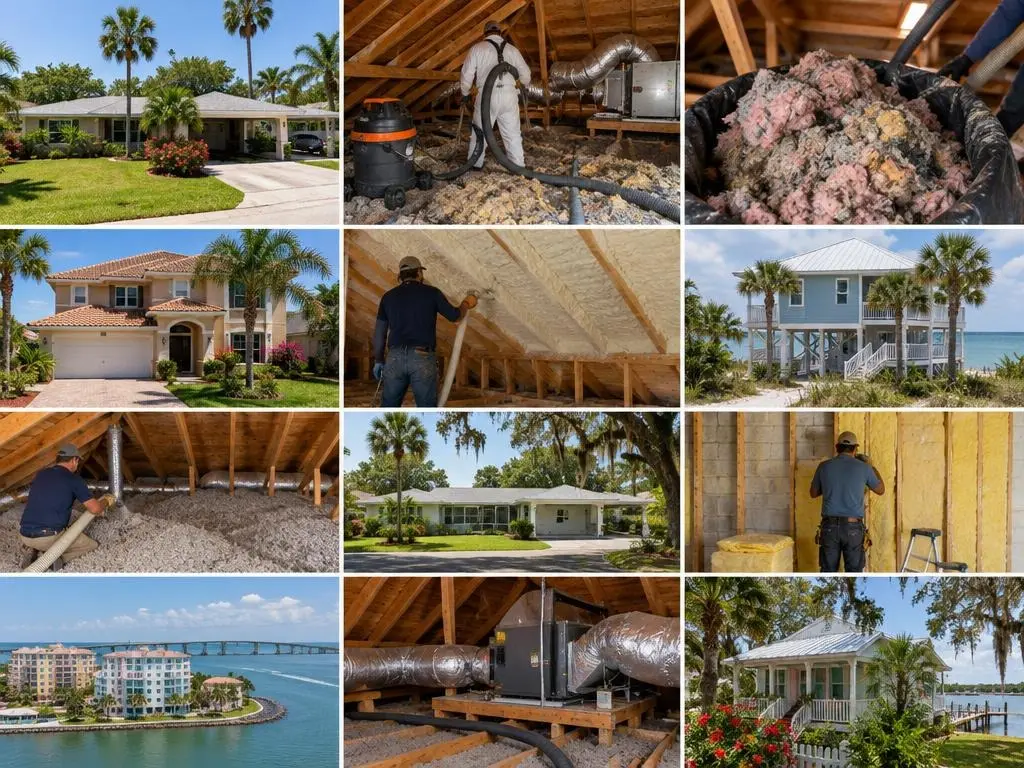
Attic Insulation & Air Sealing Cost Ranges
| Job | Range and source |
|---|---|
| Typical attic insulation job | $1,000 to $2,700, average about $1,800 (HomeGuide) |
| Air sealing | $350 to $3,000 (HomeGuide) |
| Blown-in on the attic floor | $0.90 to $2.40 per sq ft (HomeGuide attic guide) |
| Foam on the attic floor | $1,100 to $6,800 (HomeGuide) |
| Foam under the roof deck | $1,500 to $9,000 (HomeGuide) |
| Foam in an existing attic | $2,500 to $12,000 (Fixr) |
| Taking out old insulation | $1 to $2 per sq ft (HomeGuide) |
Ranges come from HomeGuide's January 2026 attic guide and Fixr's 2025 spray foam guide. How much sealing is needed, the depth, attic access and any removal change the total. Once we have been in your attic, the written estimate we give you sets the price.
How an Attic Job Runs
1. Attic inspection
We measure existing depth, check ducts, roof sheathing, vents and signs of pests.
2. Written plan and price
The quote lists the leaks to seal, the material and depth, and the target R-value.
3. Seal the ceiling
Leaks are sealed from the attic side, and baffles go in at the eaves.
4. Insulate
Loose fill is blown to depth, with depth markers so you can check it.
5. Walk-through
We show you photos or the attic itself and leave the hatch sealed and insulated.
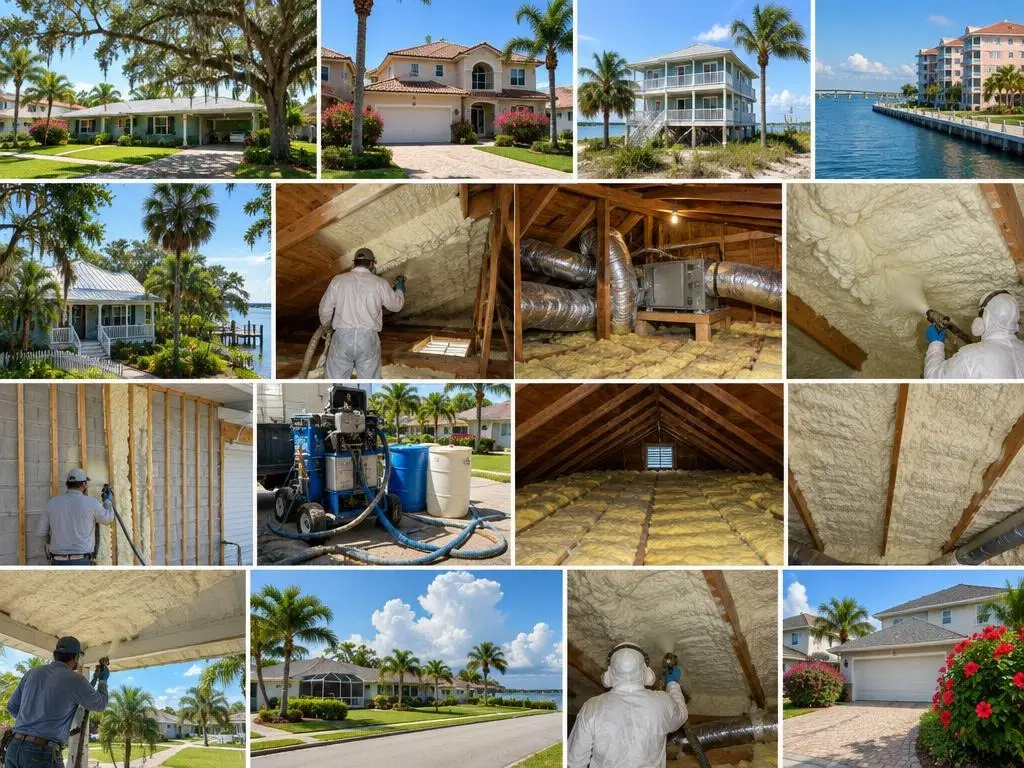
Why Choose Us for Attic Insulation & Air Sealing
Sealing is itemized
The quote says which leaks get sealed, not just how many bags go in.
Depth you can check
Depth markers stay in the attic so you can see what was installed.
Attic Insulation & Air Sealing Questions
Is there an attic insulation code in Florida?
Yes. The 2023 Florida Building Code, Energy Conservation lists R-38 for ceilings in climate zone 2, which includes Pinellas County. It applies to new construction and permitted work; for an existing home, the Department of Energy suggests adding R-38 to R-49 where only a few inches exist.
Can you add insulation over what is already there?
Usually, if the old insulation is dry, clean and not hiding a problem. If it is wet, moldy, full of rodent droppings or compressed into a thin mat, we recommend removing it first.
Will more attic insulation lower my power bill?
In most under-insulated Florida attics it reduces how hard the air conditioner works in summer. How much you save depends on how little was there before, how leaky the ceiling was, and where your ducts are.
Should I add a radiant barrier too?
A radiant barrier reflects some roof heat and can help in a hot attic, but it does not replace insulation depth or air sealing. We can talk through whether it makes sense once we have seen your attic.
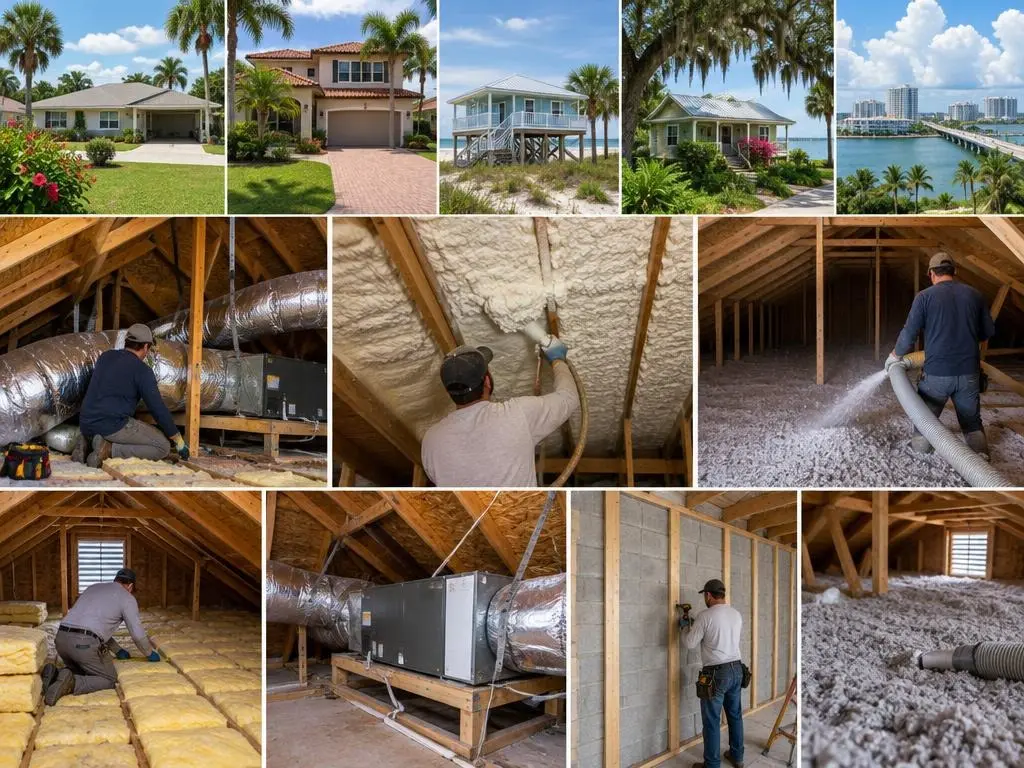
Attic Insulation & Air Sealing Service Areas
- Spray Foam Insulation in Clearwater, FL
- Spray Foam Insulation in Largo, FL
- Spray Foam Insulation in Dunedin, FL
- Spray Foam Insulation in Palm Harbor, FL
- Spray Foam Insulation in Safety Harbor, FL
- Spray Foam Insulation in Oldsmar, FL
- Spray Foam Insulation in Tarpon Springs, FL
- Spray Foam Insulation in Seminole, FL
- Spray Foam Insulation in Pinellas Park, FL
- Spray Foam Insulation in East Lake, FL
- Spray Foam Insulation in Belleair, FL
- Spray Foam Insulation in Belleair Bluffs, FL
- Spray Foam Insulation in Indian Rocks Beach, FL
- Spray Foam Insulation in Holiday, FL
- Spray Foam Insulation in New Port Richey, FL
- Spray Foam Insulation in Trinity, FL
- Spray Foam Insulation in Westchase, FL
- Spray Foam Insulation in Town 'n' Country, FL
- Spray Foam Insulation in Kenneth City, FL
- Spray Foam Insulation in Madeira Beach, FL
Get an Attic Insulation & Air Sealing Estimate
Book an attic visit and get a written plan with depth, R-value and price.